
People We Meet on Vacation: The Book vs. The Movie
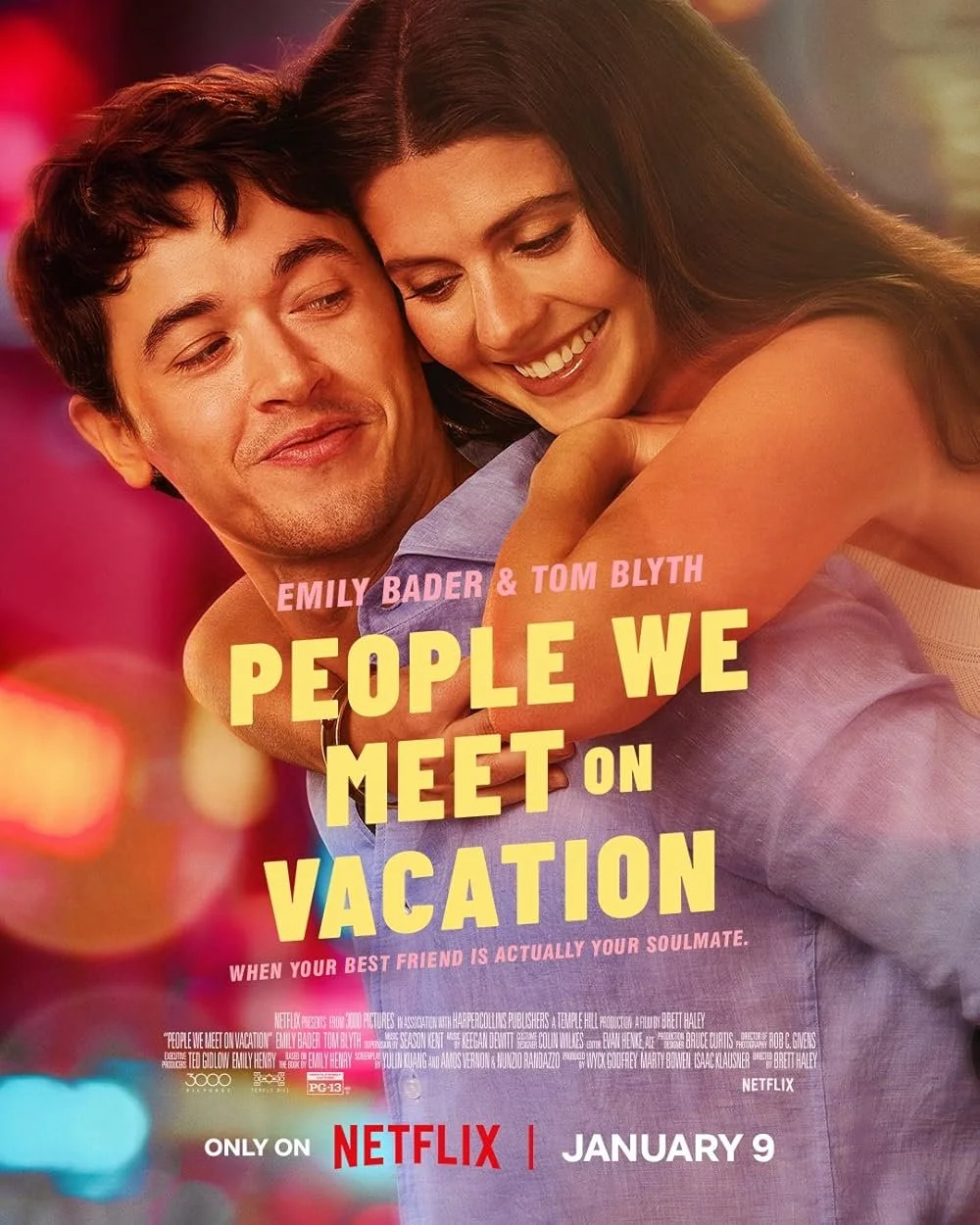
Some love stories don’t sweep you off your feet all at once. They sit beside you… linger… wait.
That’s how People We Meet on Vacation felt when I read it last year, like a slow, aching companionship that unfolded over time, over places, and over summers that always meant more than the characters admitted out loud.
Now that the People We Meet on Vacation has finally arrived to Netflix, I did what I always do with book-to-screen adaptations: I watched closely, compared honestly, and paid attention to what changed. And not just in plot, but in feeling.
The Comfort of the Book: Why People We Meet on Vacation Worked So Well on the Page
The book version of People We Meet on Vacation is gentle in the way real friendships are gentle. It’s built slowly and unintentionally, almost accidentally.
Emily Henry lets us live inside Poppy and Alex’s relationship across years, not just moments. We don’t just see that they’re close; we understand how they became that way. Inside jokes, missed chances, emotional near-misses, and quiet realizations that show up long before either of them is brave enough to name them.
The nonlinear timeline (which is something I initially found a bit jarring) ultimately served the story. Each jump back and forth revealed another layer:
how the friendship formed
how the rift happened
how fear quietly did more damage than any argument ever could
Most importantly, the book gives the slow burn the time it needs. The repair comes first. Then the love follows. The ending feels deliciously earned because you’ve watched them hesitate, retreat, grow, and finally choose.
That patience, my friends, is the book’s greatest strength.
The Movie Version: Familiar, Lighter, and (Yes) A Little Rushed
I liked the movie. I didn’t love it. And that’s not a criticism so much as an observation.
The movie version of People We Meet on Vacation leans into familiar romantic comedy beats. It’s lighter. More streamlined. A little shinier. And, perhaps inevitably, faster.
The emotional core is absolutely there. The heart of Poppy and Alex’s connection survives the transition to screen. But the pace changes everything.
In the movie:
The repair and the romance happen almost simultaneously
The emotional tension resolves more quickly
The story trades depth for momentum
One of the biggest shifts is where that emotional repair happens. In the book, my memory is of the rekindling unfolding during one final trip that isn’t centered around a wedding. In the movie, everything converges in Barcelona during Alex’s brother’s wedding—beautiful visually and efficient narratively, but emotionally compressed.
It works. But it doesn’t linger.
Casting & Chemistry: Where the Movie Absolutely Gets It Right
Let’s talk casting, because this is where the movie shines. Poppy and Alex feel exactly right.
Their chemistry is natural, warm, and believable. There’s ease between them, the kind that suggests years of shared history even when the script doesn’t have time to show it all. Their banter works. Their silences work. Their affection feels lived-in rather than performative.
If there was one thing I was nervous about, it was whether the movie could sell the idea that these two people would rather risk everything than lose each other. And so, on that front, it was a great success.
The Timeline Question: Visuals Make All the Difference
One thing the movie does better than the book is handling the dual timeline.
On the page, jumping between summers can feel disorienting at first. On screen, it’s intuitive. Visual cues (like hair, clothing, and settings) do the work quickly and clearly. The timeline feels easier to follow and less mentally demanding.
This is one of those rare cases where adaptation actually improves clarity. Even if clarity isn’t the same thing as depth.
What the Movie Loses Without the Slow Burn
Here’s the honest truth: I didn’t ache the way I expected to. Not because the story is bad. But because longing needs time.
The movie doesn’t quite give us space to sit in the almost-love, the restrained affection, or the internal tension that makes the eventual confession feel inevitable rather than convenient.
There were no moments where I felt that deep, chest-tightening pull. No scenes that made me pause and think, oh… this is going to hurt before it heals.
And because of that, the ending—while cute and satisfying on the surface—didn’t land as hard emotionally. Without the long wait, the payoff feels lighter and sweeter.
Book vs. Movie: A Side-by-Side Snapshot
The Movie
Faster, more streamlined
Emotional beats combined
Repair and romance overlap
Ending feels pleasant, but lighter
The Book
Slower, deeper emotional build
More time spent on friendship formation
Repair happens before romance
Ending feels earned
Neither is wrong. They’re just telling slightly different versions of the same story.
So… Which One Should You Choose?
This is another case of the book being better, but the movie still having a place.
If you love emotional depth, slow-burn tension, and the quiet agony of “almost,” read the book (or reread it) first.
If you want something cozy, visually romantic, and easy to watch on a weekend night, the movie works.
Final Thoughts: Why This Story Still Matters
At its core, People We Meet on Vacation, in any form, is about timing, fear, and the quiet tragedy of loving someone before you’re ready to admit it.
The book lets that truth breathe.
The movie packages it neatly.
Both are worth your time. But only one stays with you after the credits roll.
Have you read the book? Or watched the movie? Did the ending hit for you or did you miss the slow burn too?
Let me know in the comments, and if you’re a fellow book-to-screen skeptic, you already know: we’ll be doing this again the next time Hollywood comes for our favorite love stories!



A spoiler-filled, conversational comparison of the Reminders of Him movie and book, including what stayed faithful, what changed, and why both versions of Kenna and Ledger’s story work so well.