
The Love Hypothesis Book vs. Movie: What the Adaptation Got Right and Wrong
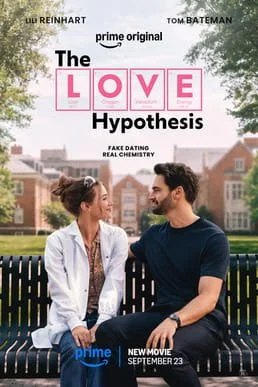
When I finished The Love Hypothesis by Ali Hazelwood in 2022, I gave it four stars. My review was short and clear about what worked for me: “There were some moments where the leading lady was hard to relate to. But the hero, chef’s kiss, perfection. Moody and brooding and smart and territorial and patient. Also. The funniest book I’ve ever read.”
Four years later, meaning a week ago, I watched The Love Hypothesis movie on Prime Video and gave it four stars too. Except these are not the same four stars.
I enjoyed the movie, and I think it works perfectly well as a romantic comedy. But it did something interesting in adapting a book I really enjoyed: it improved the character I had the most trouble connecting with and diminished the character I had loved most. By the time the credits rolled, my reaction was, “Okay, that was pleasant.” I enjoyed the two hours I spent watching it, but I'll probably rarely watch it again.
Watching The Love Hypothesis Four Years After Reading It
My sister read The Love Hypothesis shortly after I did, and before watching the movie, she decided to reread it. In retrospect, I probably should have done the same thing 😂.
Four years is an interesting amount of distance from a book. I couldn't remember every scene well enough to catch every small change the movie made. But I remembered the book well enough to know how it made me feel. I remembered laughing a lot. I remembered struggling to connect with Olive. And I definitely remembered loving Adam.
So I wasn't watching the adaptation with a mental checklist of scenes I expected it to recreate. Instead, I found myself comparing the feeling of the movie to the feeling I remembered from the book. In some ways, that probably made the differences even more noticeable.
Movie Olive Worked Better for Me Than Book Olive
Olive was my biggest issue with the original novel. Even in my 2022 review, when the book was fresh in my mind, I described her as difficult to relate to. I remember wanting to really like her while feeling as though I could never quite figure out who the character wanted to be.
The movie's version of Olive worked much better for me. She felt warmer, more vulnerable and more approachable. I understood her better, and I found myself rooting for her in a way I don't remember doing while reading the book.
That is one of the places where I think a book-to-movie adaptation can actually improve upon its source material. A novel gives us access to a character's internal thoughts, but seeing facial expressions, body language and relationships play out in front of us can make a character feel more human. For me, the movie gave Olive a softness that made her easier to connect with.
The supporting characters were another strength of the adaptation. Anh felt exactly right to me, and the professor was another character who seemed to jump naturally from the page onto the screen. The movie did a good job of making the world around Olive feel lively and believable, even when some characters and storylines from the novel had to be condensed or removed.
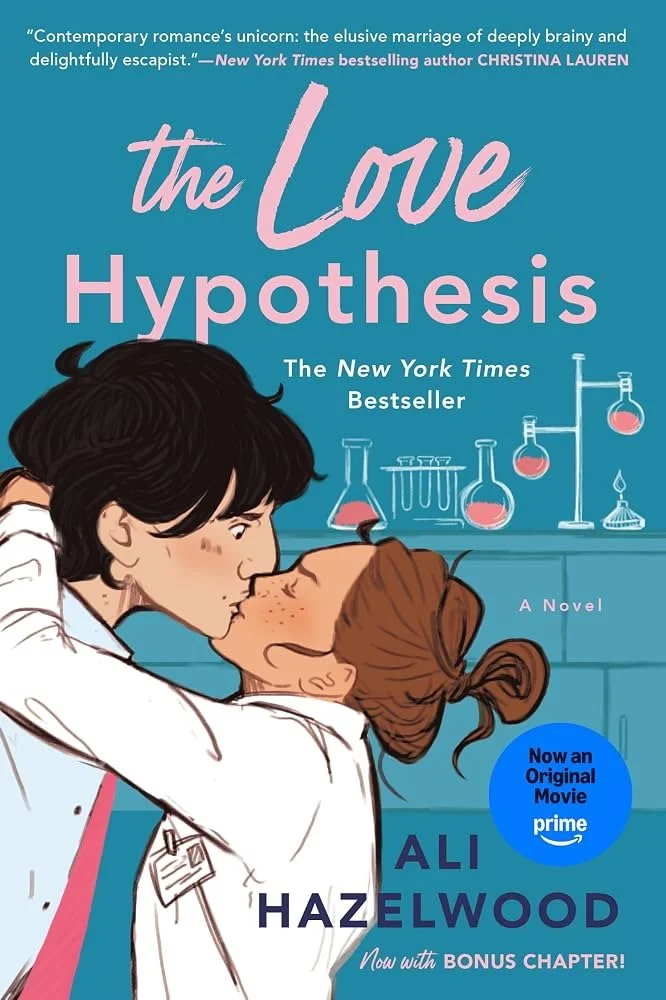
Unfortunately, Adam Had the Opposite Problem
This is where The Love Hypothesis movie lost me a little.
Book Adam was the reason I loved the book as much as I did. Apparently, 2022 me considered him “chef's kiss, perfection,” which feels dramatic until I read the rest of my review: moody, brooding, smart, territorial and patient. Yes. That sounds exactly like my preferred fictional hero.
There is a particular kind of romantic hero that works exceptionally well in books. He is difficult or intimidating to everyone else, but the woman he loves slowly discovers that there is something much softer underneath. We like a man who appears tough on the outside and turns out to be gooey behind closed doors.
Movie Adam never really gets gooey.
He comes across as robotic for much of the movie, and I never felt like I got enough access to what was happening underneath his exterior. Aside from his anger toward the end, there weren't many moments when I felt genuine emotion coming from him. I understood that he cared about Olive because the story told me he did, but I didn't always feel it.
Some of that comes from changes the adaptation made to Adam's story. The book gives us more context for his feelings toward Olive and eventually reveals that his interest in her began well before their fake-dating arrangement. Compressing or removing some of that history makes it harder for the movie to reveal the softness underneath his brooding exterior.
The result is that the adaptation improved Olive while flattening Adam, which is almost exactly the opposite of my experience with the book.
The Chemistry Needed More Time
That difference also affected the chemistry between Olive and Adam. I remember the book having a much stronger buildup, with awkward moments, tension and humor gradually creating the relationship between them. The fake dating trope worked because we got to watch the line between pretending and actually caring about each other become increasingly blurry.
I didn't get that same feeling from the movie.
There are romantic movies where the chemistry between the leads is so convincing that you almost feel like you're intruding by watching them. I never had that feeling here. Olive and Adam were pleasant together, and I understood where the movie was taking their relationship, but I wasn't waiting impatiently for them to finally kiss.
That became particularly noticeable during the hotel scene. The transition from their developing relationship to physical intimacy felt abrupt to me. One minute, they're barely flirting, and the next, they're ripping each other's clothes off.
The book had more room to build toward that moment and to explore Olive's relationship with attraction, comfort and trust. A movie obviously has less time, but something was lost in the compression. The scene itself wasn't necessarily the problem. I just wasn't convinced the relationship had arrived there yet.
The Love Hypothesis Was Funnier on the Page
One detail I had forgotten until I pulled up my original review was just how funny I found The Love Hypothesis. I didn't say it was a funny book. I called it “the funniest book I've ever read.”
The movie is funny too, particularly when the supporting characters are involved. But I don't think it captures quite the same awkward humor I remember loving in the novel. Part of the comedy of the book came from Olive's internal experience and the increasingly ridiculous situations created by fake dating a professor she absolutely was not supposed to fall in love with.
Some of that naturally becomes harder to translate when the story moves from the page to the screen. The movie still has the bones of a romantic comedy, but I didn't laugh nearly as much as I remember laughing while reading it.
Tom Benton Works as a Very Obvious Villain
Tom Benton is one of the characters I wish I remembered more clearly from the book because his role in the movie felt particularly abrasive. I remembered the basic storyline, but I didn't remember his proposition toward Olive feeling quite as direct as it does on screen.
The movie leaves very little ambiguity about how we're supposed to feel about him. He becomes the obvious villain, and I disliked him accordingly.
In this case, the directness worked for me. The movie has limited time to establish the threat he poses to Olive personally and professionally, and it accomplishes that quickly. By the time Adam's anger finally breaks through his otherwise controlled exterior, there is no question about why.
The Ending Still Works
For all of my complaints about the chemistry, I thought the movie preserved the satisfying neatness of the book's ending. The Love Hypothesis isn't a story I turn to for ambiguity. It's a romantic comedy. I want the romantic payoff, the villain dealt with and the loose ends tied up.
Both versions give us that.
The pacing of the movie also worked surprisingly well overall. Despite condensing storylines and changing some details, it didn't feel like a frantic summary of the novel. If I hadn't read the book first, I don't think I would have spent much time wondering what was missing.
And that is probably the most important distinction in my review.
Should You Read The Love Hypothesis Before Watching the Movie?
If you love romantic comedies and have never read The Love Hypothesis, I think you'll probably find the movie perfectly lovely. It has fake dating, academia, an appropriately detestable villain, funny supporting characters and a romance that ends exactly where you want this kind of romance to end. I gave it four stars because I genuinely enjoyed watching it.
But if you've read and loved the book, particularly if you loved Adam, I would temper your expectations. The book did the chemistry and romance better. The movie did a better job, at least for me, of making Olive relatable and bringing some of the supporting characters to life.
If I could change one thing about The Love Hypothesis adaptation, I would have cast Adam differently, or at least given the character more opportunities to show the softness that made him so appealing in the book. I needed less robot and more brooding man who is secretly obsessed with this woman.
If you're choosing between the two, though, I'd read the book. Four years later, I may not remember every scene or every difference between the novel and its adaptation, but I remember how the book made me feel. The movie was pleasant. The book gave me a hero I was still complaining about them changing four years later.
![Building a Strong Coparenting Foundation [Tips and Stories]](https://images.squarespace-cdn.com/content/v1/5f49fb148109a775b6caf7a2/1730938613258-PN0THVT6LAC40C4FLI4C/unsplash-image-httxBNGKapo.jpg)
![Personal Wedding Decor Ideas [With DIY Tips]](https://images.squarespace-cdn.com/content/v1/5f49fb148109a775b6caf7a2/cf23744d-b749-4adf-885d-ee38e407d9d6/Personal+Photos+Second+Wedding+Lauren+Marie.JPG)
![Game Day Ritual Ideas [Pre-Game Football Rituals for Wives]](https://images.squarespace-cdn.com/content/v1/5f49fb148109a775b6caf7a2/92055e4e-bb36-48d8-b4d0-a86bde9e6743/Game+Day+Ritual+Ideas+Lauren+Marie.PNG)

I gave The Love Hypothesis book and movie four stars, but the adaptation improved the character I liked least while weakening the one I loved most.